Chapter 7: Tuning
IN THIS LESSON:
Learn how to properly tune the Oboe.
Tuning the Oboe
The skill of intonation (tuning) is one that is developed over time with consistent practice. Things like singing can drastically help your ability to tune because it will train you to hear and match pitch. Knowing if you are out of tune is the first step to solving intonation issues.
Tuning on the Oboe looks far different than other instruments, because unlike other woodwinds or brass, you cannot adjust your pitch using any tuning slides or by moving your mouthpiece (the reed). The reed is designed to be pushed in all of the way in the oboe, so therefore, tuning is done mostly by embouchure. You can also adjust how much reed is in the mouth to change the pitch.
The basic process for tuning the Oboe begins with physically warming up the instrument. Play some fundamentals exercises for a few minutes and then your instrument should be ready to tune.
It is not recommended to tune while not warmed up as temperature can affect pitch. A cold instrument will be flat (below the pitch) and a hot instrument will be sharp (above the pitch).
Once warm, play your tuning note using a tuner. There are many great options, but I would suggest the use of the tonal energy app - it is a great tuner and is compatible on all smart phones.
We will use “A” as it is a great note to tune on and is also the pitch that Oboe players will give to the woodwind or string ensemble as their reference pitch for tuning.
Start with closed eyes (or do not look at the tuner) and play your A. The purpose for this is to listen to your pitch first.
Then, without adjusting pitch, look at the tuner to see if you are in tune. See the examples on the right for how to adjust if you are sharp or flat.
Once adjusted, repeat the steps until you are holding the note stable and in tune.
Now that you understand pitch adjusting on the oboe, let’s go to the next chapter to learn more about intonation on the Oboe.
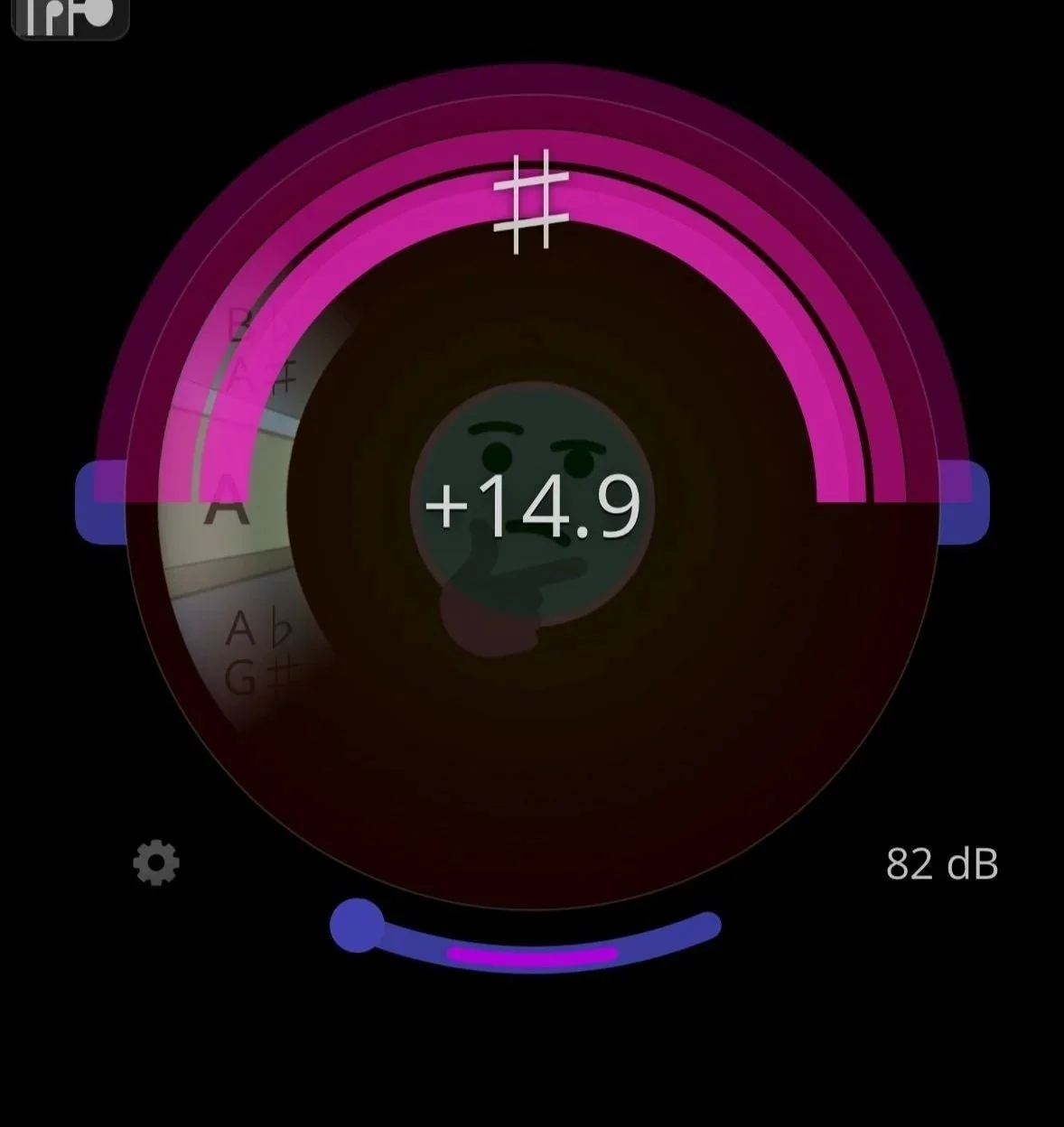
Sharp
If you are sharp, check your embouchure to ensure you are not taking in too much reed or are exerting too much pressure on the reed.
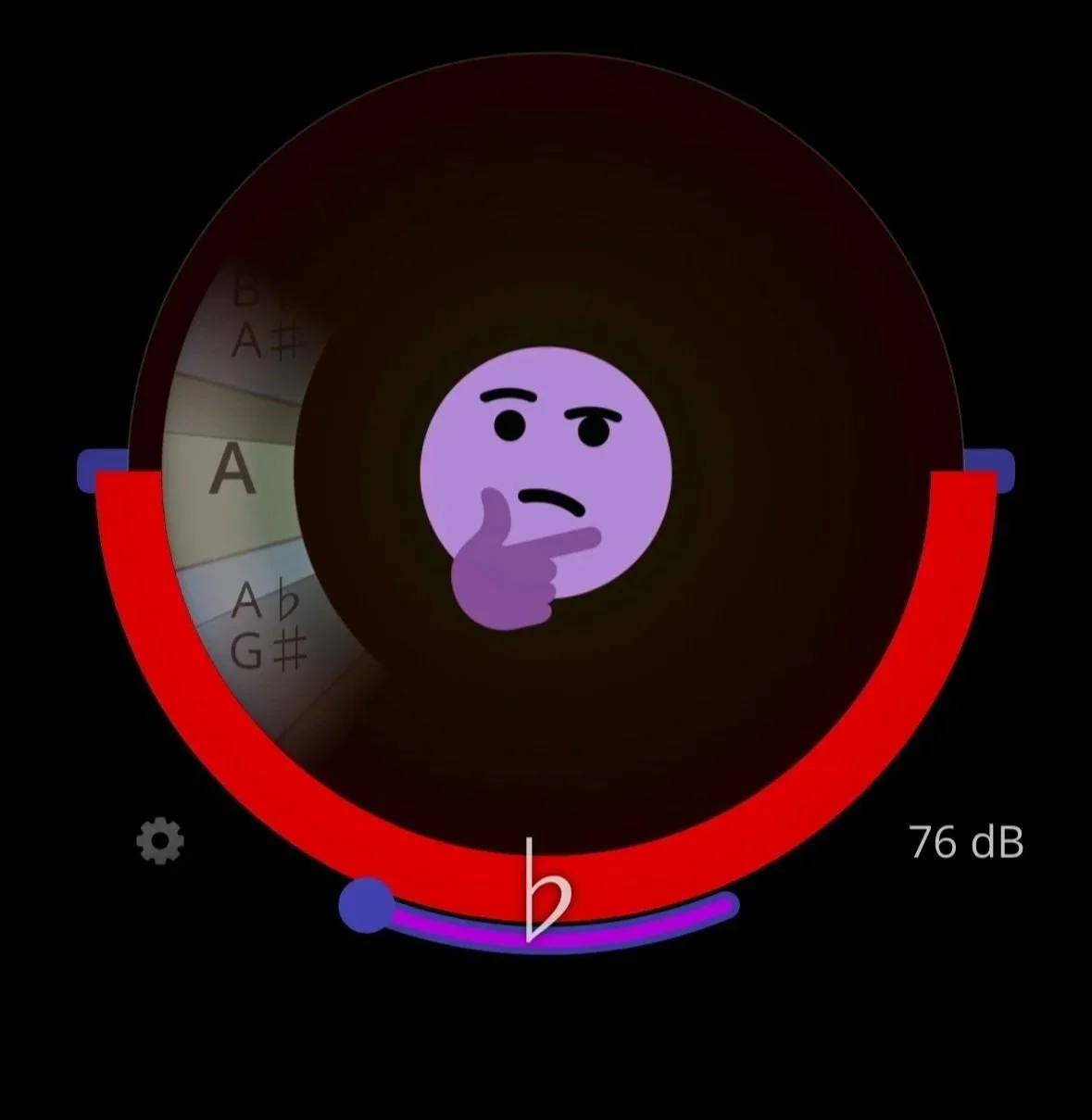
Flat
If you are flat, you may not have enough reed in the mouth and you might be too relaxed in your embouchure.
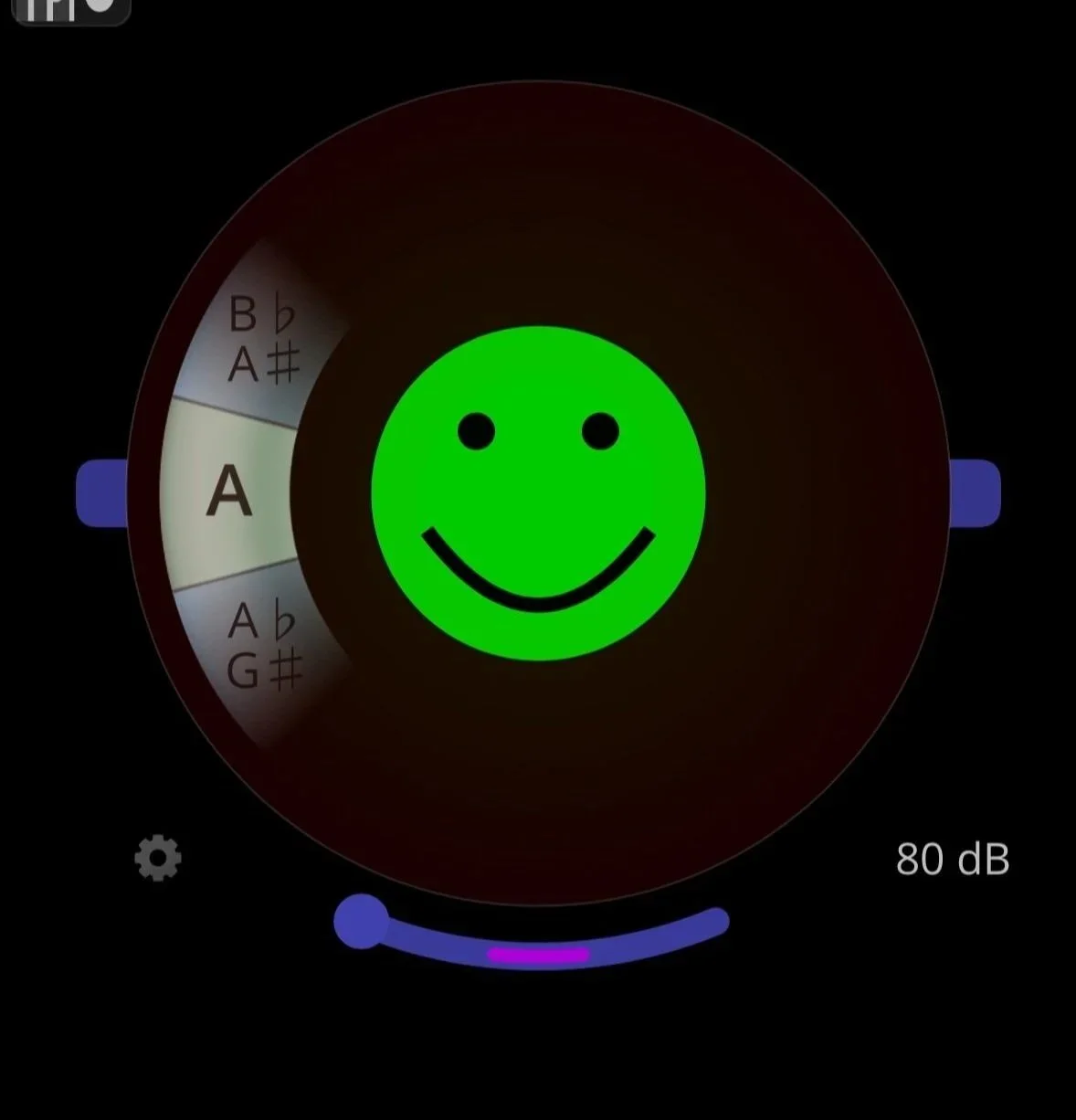
In tune!