Chapter 7: Tuning
IN THIS LESSON:
Learn the pitch tendencies on the Oboe and how to make pitch corrections
The Art of Intonation
Tuning is a constant process when performing on any wind instrument. You cannot simply tune your tuning note and assume you will be in tune from that point on. Ear training is a necessity to learning what is in and out of tune. Utilize drones and singing to help develop your ear.
Generally, fixing intonation on the Oboe comes down to three main factors: Embouchure control, airspeed/air-pressure and how much reed you are taking in. While their are alternate fingerings you can use to improve pitch, learning to match with your ear and then adjusting with your embouchure/reed is the best way to improve pitch. Adjusting the embouchure affects pitch the most.
If you are flat, you want to raise the pitch. To raise pitch, firm up your embouchure pressure on the reed or take slightly more reed into the mouth.
If you are sharp, you want to lower the pitch. To lower pitch, relax your embouchure pressure on the reed or take slightly less reed into the mouth.
Pitch Tendencies
Below are notes that are naturally out of tune on most Oboe’s and some techniques to adjust them. Spend some time getting familiar with them and their adjustments to apply them in your Oboe playing. Notes not listed are typically fine.
Ear training and tone development are imperative to your intonation!
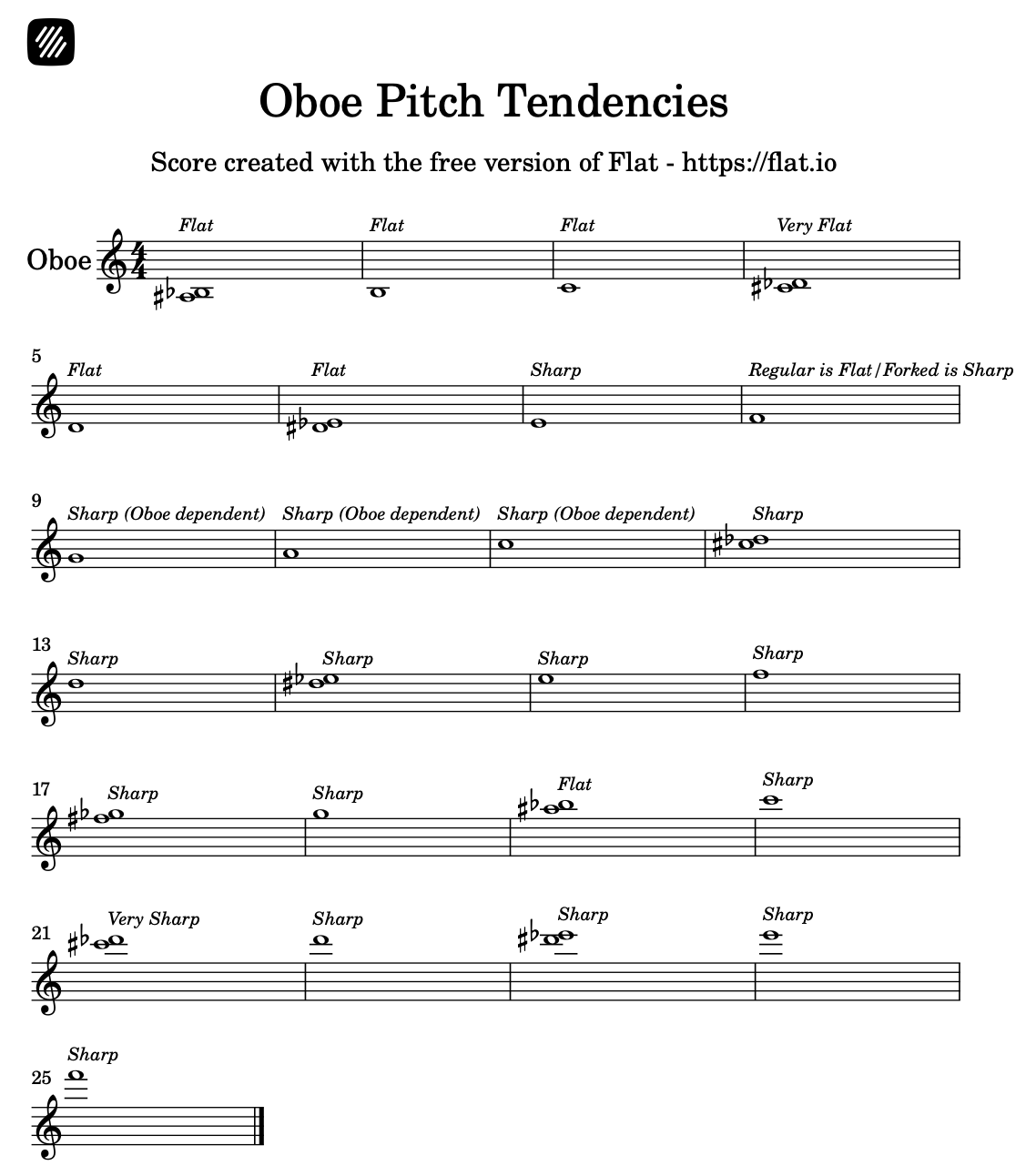
Keep in mind that these are general guidelines. Pitch can depend on so many factors such as the temperature, your brand of Oboe, your reed, and your air. Because these are only guidelines, you need to spend time getting to know your intonation issues.
Below is a link to download a Tuning Tendency Chart.
Download this page, print it out, and grab a buddy! Mapping our your tuning tendencies is one of the best ways to know your instrument and your intonation tendencies!